
Small Caps
PART 1 -
Graphite stocks on the ASX: The Ultimate Guide
By
Lorna Nicholas
-
March 21, 2018
Earmarked as a critical mineral in the United States and the European Union, graphite is a paramount ingredient in numerous industry applications including the surging lithium-ion battery sector.
What many lithium punters may not be aware of is the fact the booming lithium-ion battery comprises up to 40 times more graphite than lithium.
While graphite’s uptake in the lithium-ion battery is rocketing, its primary end-use is the global steel industry.
The steel sector has stagnated in recent years, but it has begun its upward climb with the World Steel Association estimating global steel production rose 5% during 2017.
As this sector picks up and the lithium-ion battery swallows more of the graphite market, the mineral is facing a near-future of tight supply and resultant price hikes.
China’s mighty influence
Because China contributes between 65% and 80% of global graphite supplies, the sector has largely been at the mercy of China’s supply and demand decisions for years, with the Asian powerhouse nation also setting the global standard for the commodity’s price.
Since 2015, China’s government has taken a harder line on pollution and made sweeping changes to clean up some the country’s environmental problems. This has led to rolling back production and intermittent shutdowns of mines and operations for multiple commodities including graphite.
As part of its environmental focus, graphite production in the region was curtailed mid-last year causing a sudden drop in the country’s exports.
China’s production cuts led to tighter global graphite supplies during the latter half of the year, triggering the mineral’s price to bounce off its bottom in October 2017, after languishing there since 2016.
Graphite prices between 2011 and 2017
Graphite is not traded on any commodity exchange and its pricing is based on direct seller and buyer negotiations. As such, published prices are rough guides with the graphite market relatively opaque, albeit, less so now.
The mineral’s final price also comes down to myriad factors including purity, crystallinity, size (mesh), downstream processing (ie spherical graphite), and desired end-use.
As a rough guideline, flake graphite with +80 mesh and graphitic carbon content over 95% generally commands the highest price, with the value typically increasing with purity and size.
According to analyst Roskill, the October rebound for flake graphite containing 94% to 97% total graphitic carbon (TGC) resulted in a 36% price jump to an average US$863 per tonne. Medium flake graphite pulled in around US$953/t, while large flake graphite rose to US$998/t.
Two months later, analyst Benchmark estimated the free-on-board price for large flake graphite out of China comprising 94-95% TGC and +80 mesh had risen to US$1,125 in December 2017.
During the 12 months between December 2016 and December 2017, Benchmark purports the price for all natural graphite products had leapt, on average, 25%.
Despite the recent price resurgence, graphite still has a way to go till it returns to its former glory.
The United States Geological Survey organisation (USGS) reported graphite prices for late 2011. The organisation stated the price for microcrystalline graphite comprising 80% to 85% TGC, which is the lowest of all graphite types, was between US$600 to US$800/t in 2011. Medium-to-large flake graphite with 90% TGC ranged from US$1,150/t to US$2,000/t. Meanwhile, the rarer and purer Sri Lankan lump and chip graphite containing 99% TGC was raking in between US$1,700/t to US$2,070/t during that same period.
For synthetic graphite, the USGS claimed the 99.9% pure synthetic graphite was bringing in between US$7,000/t and US$20,000/t.
Graphite and its complexity
Perhaps more complex than some other commodities, the graphite market is less transparent and influenced by more factors including ore type, purity, downstream processing, and destined end-use.
As with mineral’s numerous pricing influences, there are also several forms of graphite, with each type better suited to particular applications.
The mineral expresses both metallic and non-metallic properties and can be sought for both or its individual qualities.
To better understand the mineral, its supply and demand dynamics and global performance, it helps to go back to basics.
What is graphite?
Graphite is a soft form of pure carbon that is generally black in colour and found as crystal flake or a mass in the natural environment.
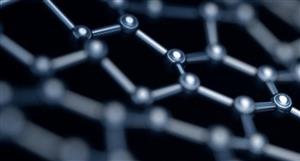
The mineral requires pressure to develop into its three-dimensional structure and comprises parallel sheets of carbon atoms piled on top of each other.
Graphite is one of three naturally existing carbons, with the other two, coal and diamonds, comprising the same chemical formulas but different properties.
Allotropes of carbon: graphite, diamond, fullerene, graphene.
Graphite can be classified as micro-crystalline (amorphous), or crystalline.
Micro-crystalline graphite looks like anthracite coal to the untrained eye and has the lowest graphitic carbon content.
Whereas, crystalline graphite can present as flake in varying sizes, or lumps and chips, which are higher grade but come from smaller and deeper operations, primarily, Sri Lanka.
Graphite is deemed eco-friendly and a chemically inert and safe material.
Graphite history
The first known use of graphite has been traced back to 750 BC to 43AD, where the material was used in paint for decorating ceramics.
Some 1,500 years later, an English shepherd apparently found the anthracite-type graphite and realised it could be used to mark sheep.
French inventor Nicholas Jacques Conté combined clay with graphite and created the world’s first “modern pencil”.
Around the same time, it was noticed graphite could be used in refractories to line the moulds. Weapon manufacturers found cannon balls and other artillery were smoother and more effective when crafted in the graphite-lined mould.
In 1779, Swedish chemist Carl Scheele discovered graphite was actually a form of carbon and not the “black lead” it was widely believed to be at the time.
A decade later, German geologist Abraham Gottlob Werner came up with the name graphite, which means “to write” for the mineral.
Graphite types and their origins
Micro-crystalline graphite is the most abundant form, accounting for about 60% of the graphite market. This graphite’s carbon ranges from 70% to 85% and it is mostly utilised for its lubricant properties.
The remaining 40% of natural graphite occurs as flake or the Sri Lankan lump and chip material. Flake has a natural graphitic carbon content ranging between 80% and 98% and is found in varying sizes and coarseness. The lump graphite is much rarer, but a higher grade and comes from smaller and deeper operations.
The primary countries where crystalline flake graphite deposits are found include: Brazil, Canada, China, India and Madagascar with several other African nations emerging with advanced huge high-grade graphite deposit discoveries including Mozambique and Tanzania.
Sample of graphite concentrate from Triton Minerals’ Ancuabe project in Mozambique.
On the other hand, the more valuable Sri Lankan lump graphite can reveal grades higher than 90% from hand sorting alone and before beneficiation.
In addition to naturally occurring graphite, there are several processed graphite products including expanded graphite. Expanded graphite is made by treating the flake with chromic and sulfuric acids.
The acid treatments augment the surface area up to 1,000 times. Expanded graphite is used to create graphite sheets and foils for a variety of industrial, consumer electronics and battery markets.
Expanded graphite also has a huge emerging market with its incorporation in flame retardant building materials.
According to Graphex Mining (ASX: GPX), China needs around 2mt of expandable graphite a year.
Graphex managing director Phil Hoskins said expandable graphite demand is rapidly growing with the material sought at levels ten times higher than the booming lithium-ion battery sector.
Another graphite product is spherical graphite, which is made from processing flake graphite.
The flake form is then altered into spherical shapes and purified to at least 99.95% graphitic carbon. The resultant spherical graphite is between 10 and 40 microns, with a larger surface area, and conductivity.
This beneficiated graphite is the primary graphite product used in the lithium-ion battery’s anode.
Although it hasn’t been derived from natural graphite, synthetic graphite is used in many of the same applications as its natural alternatives.
Synthetic graphite is purer, but costlier and is consumed in nuclear moderator rods, as well as some batteries and other natural graphite applications where purity is the primary driver and expense less of an issue. However, it is unsuited to foundry because of its higher porosity.
Differences between graphene and graphite
A rapidly emerging product derived from graphite is graphene.
Simply, graphene is a two-dimensional atomic layer of graphite and is the strongest material discovered to date.
The material is usually created from graphite by mechanical exfoliation. However, this method of liberating graphene is time-consuming and costly.
Graphene has numerous properties that make it an appealing alternative in multiple applications. Because of this, many companies are working on commercially viable ways of mass-producing the material.
Graphene is more robust than a diamond, with 40 times the gemstone’s strength. Graphene is also flexible, thin, light, transparent and a fantastic conductor of electricity and heat.
The material is actually a better conductor of electricity than graphite.
Graphene’s use in many applications is under investigation including energy, electronics, coatings, sensors and membranes for purifying water – just to name a few.
Despite its great qualities, commercial production to-date has been limited. Although, one Australian company First Graphene (ASX: FGR) has claimed it is on the path after opening a scalable graphene producing operation in Western Australia.
Graphite uses
Natural graphite is used in hundreds of applications within steel and manufacturing sectors – mostly due to its ability to retain strength and rigidity under temperatures exceeding 3,600 degrees Celsius.
The steel and manufacturing sectors also seek out graphite for its resistance to oxidation.
Additionally, the mineral is self-lubricating and resistant to chemicals.
With both metallic and non-metallic properties, graphite’s primary metallic features include its thermal and electrical conductivity. These features have resulted in the mineral’s burgeoning use as the anode material in the lithium-ion battery.
The mineral’s non-metallic assets comprise its elevated thermal stability, as well as its capacity to remain inactive against chemical reactions and reduce friction. When sought for these properties, the mineral is incorporated in lubricants, coatings, consumer electronics, crucibles, pencils and refractories.
Graphite’s self-lubrication, and resistance to oxidation and temperature stress afford it another important feature for its use in the lithium-ion battery anode.
............................................................................................................................................................
A wonderful read that highlights FGR's role !!!
Kind Regards
DYOR!!!






Add to My Watchlist
What is My Watchlist?

